
Conservation Genetics and Non-Native Species
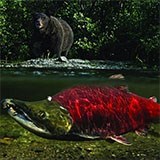
New tools in quantitative genetics allow FLBS researchers to gain a more detailed understanding of the relationships between native and non-native species and to explore their interactions within the context of climate change and other environmental influences.
Publications
Geffen, E., G. Luikart, and R.S. Waples. 2006. Impacts of modern molecular techniques on conservation biology. Chapter 4 In: Key Topics in Conservation Biology, Eds: D.W. Macdonald and K. Service, Blackwell Publishing.
Schwartz, M.K., G. Luikart, and R.S. Waples. 2007. Genetic monitoring as a promising tool for conservation and management. Trends in Ecology and Evolution, 22:25-33.
Beja-Pereira, A., B.J. Bricker, S. Chen, *C. Almendra, P.J. White, and G. Luikart. 2009. DNA genotyping suggests recent brucellosis outbreaks near Yellowstone National Park originate from elk. Journal of Wildlife Diseases, 45:1174-1177.
Archie, E.A., G. Luikart, and V. Ezenwa. 2009. Infecting epidemiology with genetics: A new frontier in disease ecology. Trends in Ecology and Evolution, 24:21-30.
Allendorf, F.W., P. Hohenlohe, and G. Luikart. 2010. Genomics and the future of conservation. Invited Review, Nature Reviews Genetics, 11:697-709.
Allendorf, F. W., G. Luikart and S. N. Aitken. 2013. Conservation and the Genetics of Populations, 2nd edition. Wiley-Blackwell, Chichester
Andrews, K.R., and G. Luikart. 2014. Recent novel approaches for population genomics data analysis. Molecular Ecology, 23:1661-7. doi: 10.1111/mec.12686.