Volunteer
Join Us in the Field this Season!
2026 Volunteer Information
The Montana Pesticide Stewardship Partnership Program (PSPP) is a collaborative effort led by the University of Montana’s Flathead Lake Biological Station. Our goal is to better understand where pesticide pollution is showing up in Montana’s rivers and streams, how pesticides move across the landscape, and how we can work with communities, producers, watershed groups, and local partners to reduce pesticide pollution in our waters. PSPP efforts include water‑quality monitoring, data analysis, community outreach, and more to protect the headwaters of the Columbia River Basin.
As we prepare for the 2026 monitoring season, we’re inviting community members to join us in the field! Volunteers are a very important part of our work, helping us collect data across the Columbia River Basin headwaters.
Our working area stretches from the Canadian border down to the Bitterroot and Beaverhead mountain ranges. The Columbia River Basin in Montana includes Lincoln, Flathead, Sanders, Lake, Mineral, Missoula, Powell, Granite, Ravalli, Deer Lodge, Silver Bow, and Lewis & Clark counties.
This region includes communities such as Libby, Eureka, Troy, Kalispell, Whitefish, Columbia Falls, Bigfork, Polson, Thompson Falls, Superior, Missoula, Seeley Lake, Hamilton, Philipsburg, Anaconda, and Butte, along with dozens of rural towns, forested headwaters, and agricultural valleys. Major river systems in our monitoring area include the Flathead, Kootenai, Clark Fork, Blackfoot, and Bitterroot, as well as countless creeks and tributaries that feed into them.
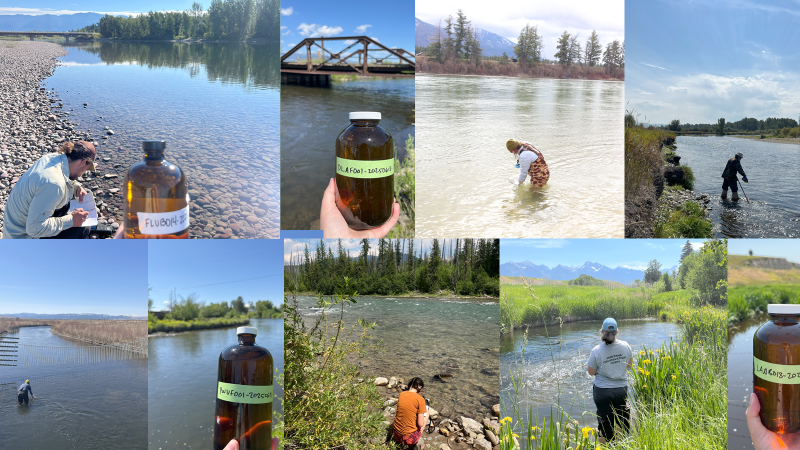
Each sampling day looks a little different depending on the site, but volunteers can expect to spend time outdoors, learn how to collect water samples, learn how to use a handheld water‑quality meter, chat with a PSPP team member, and see firsthand how we monitor. A PSPP team member will lead every outing and provide all equipment and instruction. Volunteers simply join us for the day and help with the hands‑on work.
Volunteer support is needed May through November, especially in the summer months when pesticide use and runoff potential are highest and we are collecting a lot of samples. Whether someone is able to join us once or wants to return throughout the season, every set of hands helps.
If you or someone you know is interested, please fill out our New Volunteer Interest Form, and we’ll be in touch with more details!
If you have any questions, please contact Janelle Groff at janelle.groff@flbs.umt.edu.