Kodiak Brown Bears and Salmon Abundance
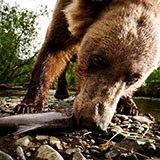
The FLBS Kodiak brown bear project is focused on understanding how bears of Southwest Kodiak Island, Alaska, behave in response to changing sockeye salmon abundance. The work, conducted by FLBS graduate student Will Deacy and other volunteers, is focused around Karluk Lake, the heart of the Kodiak National Wildlife Refuge. Although the refuge was established to protect Kodiak’s famous large bears and robust salmon runs, both bear and salmon numbers have been declining. U.S. Fish and Wildlife Service (FWS) data show that bear densities in the Karluk watershed have declined more than 45% in ten years, and this shocking population reduction created a need to better understand the relationship between salmon and bears. Plentiful salmon are critical to maintaining healthy populations of large Kodiak brown bears, so we have embarked upon a cooperative research program with the FWS using innovative field techniques to collect high resolution bear and salmon data across a suite of streams. To do this, we developed a process using remote time-lapse camera systems to count the number of salmon and bears at each of the streams around Karluk Lake.
The Fish and Wildlife Service reached out to the Flathead Lake Biological Station (FLBS) to tackle this project because of our experience researching salmon ecosystems around the Pacific. Both the FWS and FLBS have made significant investments over the first three years of this project. We are now looking for partners to complete the final two years of the project and to collect the data needed to fully understand the impacts of salmon declines on Kodiak bears. While many bears still roam the Kodiak wilderness, long-term data suggests their numbers are declining in parallel with salmon abundance. It is critical that we understand the drivers of the salmon-bear relationship to protect this pristine landscape and the giants that roam it.
- Deacy, William, William Leacock, Jonathan B. Armstrong, and Jack A. Stanford. "Kodiak brown bears surf the salmon red wave: direct evidence from GPS collared individuals." Ecology 97, no. 5 (2016): 1091-1098.