
Hyporheic Corridor Concept of River Ecosystems
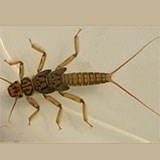
A wide variety of previously unknown biota, including stoneflies and other large-bodied organisms, exist within alluvial aquifers of the expansive flood plains of the Flathead and other gravel-bed rivers. This amazing discovery led to the “hyporheic corridor concept” of river ecosystems, which first formalized the fundamental importance of water and materials interchange between the river channel and near-surface groundwater. Organisms living in the groundwater utilize organic matter form the river and floodplain as a food source, thereby filtering, or cleansing the river water as it moves through the porous bedsediments.
Publications
- Stanford, J. A. and J. V. Ward. 1988. The hyporheic habitat of river ecosystems. Nature 335(6185):64–66.
- Stanford, J. A. and J. V. Ward. 1993. An ecosystem perspective of alluvial rivers: connectivity and the hyporheic corridor. Journal of the North American Benthological Society 12(1):48–60.
- Stanford, J. A., J. V. Ward and B. K. Ellis. 1994. Ecology of the alluvial aquifers of the Flathead River, Montana, pp. 367–390. IN: Gibert, J., D. L. Danielopol, J. A. Stanford (ed.), Groundwater Ecology. Academic Press, Inc., San Diego.
- Boulton, A. J., T. Datry, T. Kasahara, M. Mutz and J. A. Stanford. 2010. Ecology and management of the hyporheic zone: stream–groundwater interactions of running waters and their floodplains. Journal of North American Benthological Society 29(1):20–40.