
Conservation Genetics and Non-Native Species
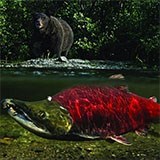
New tools in quantitative genetics allow FLBS researchers to gain a more detailed understanding of the relationships between native and non-native species and to explore their interactions within the context of climate change and other environmental influences.
More information is available on the FLBS Conservation Genetics page.
Publications
- Geffen, E., G. Luikart, and R.S. Waples. 2006. Impacts of modern molecular techniques on conservation biology. Chapter 4 In: Key Topics in Conservation Biology, Eds: D.W. Macdonald and K. Service, Blackwell Publishing.
- Schwartz, M.K., G. Luikart, and R.S. Waples. 2007. Genetic monitoring as a promising tool for conservation and management. Trends in Ecology and Evolution, 22:25-33.
- Beja-Pereira, A., B.J. Bricker, S. Chen, *C. Almendra, P.J. White, and G. Luikart. 2009. DNA genotyping suggests recent brucellosis outbreaks near Yellowstone National Park originate from elk. Journal of Wildlife Diseases, 45:1174-1177.
- Archie, E.A., G. Luikart, and V. Ezenwa. 2009. Infecting epidemiology with genetics: A new frontier in disease ecology. Trends in Ecology and Evolution, 24:21-30.
- Allendorf, F.W., P. Hohenlohe, and G. Luikart. 2010. Genomics and the future of conservation. Invited Review, Nature Reviews Genetics, 11:697-709.
- Allendorf, F. W., G. Luikart and S. N. Aitken. 2013. Conservation and the Genetics of Populations, 2nd edition. Wiley-Blackwell, Chichester
- Andrews, K.R., and G. Luikart. 2014. Recent novel approaches for population genomics data analysis. Molecular Ecology, 23:1661-7. doi: 10.1111/mec.12686.